





"Knowing what I do, there would be no future peace for me if I kept silent... It is, in the deepest sense, a privilege as well as a duty to speak out—
to many thousands of people..." —Rachel Carson
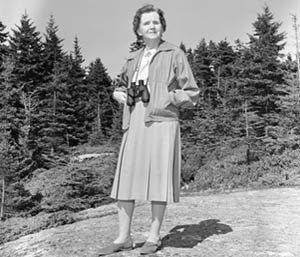
Rachel Carson

The Rachel Carson Council, an association for the integrity of the environment, founded in 1965, seeks to inform and advise the public about the effects of pesticides that threaten the health, welfare, and survival of living organisms and biological systems. The Council promotes alternative, environmentally benign pest management strategies to encourage healthier, sustainable living. ...more

Welcome to the Rachel Carson Council Website!


Over the years we at RCC have been devoted to
providing you the public with important,
timely information about the environment. 
RCC exists because of donations from individuals like you.

Visit us on Twitter

2012 Rachel Carson Council
Open House

This year's Open House took place on April 28th and honored the 50th anniversary of Silent Spring's publication.

The event featured speakers on three pertinent topics: Rachel Carson from the personal perspective of Martha Freeman, linkages between pesticides and cancer research finding by Dr. Aaron Blair, and the remarkable relationship between eels and mussels inhabiting Chesapeake Bay tributaries by fisheries biologist, Julie Deavers.  These subjects representing different aspects of Rachel Carson's ife and work.  More...

Rachel Carson's Spring Garden Plant Selections

In response to numerous requests, we are providing details concerning Rachel Carson's plant selections for the garden at her Maryland home where she wrote Silent Spring. More...


As a service to students, scholars and historians, Rachel Carson Council is providing Rachel Carson's June 4, 1963 Congressional statement,

"Statement of Rachel Carson Before the Subcommittee on Reorganization and International Organizations of the Committee on Government Operations, ENVIRONMENTAL HAZARDS, CONTROL OF PESTICIDES AND OTHER CHEMICAL POISONS"

Download PDF

RCC at work in February

In February 2012, the Rachel Carson Council prepared documents on specific issues dealing with pesticide toxicity, health and the environment.

RCC submitted two comments to the US Environmental Agency (EPA) in response to a request for public comments. One concerned the pesticide class pyrethrins/pyrethroids (7 pgs., Feb. 7, 2012) and the other concerned the neonicotinoid insecticide clothianidin (2 pgs., Feb. 21, 2012)

RCC submitted written testimony to the Council of the District of Columbia on legislation being proposed for the District of Columbia by Councilwoman Mary Cheh (4 pgs., "The Pesticide Education and Control Amendment Act of 2012", Feb. 24, 2012)

RCC's comment to the EPA (Feb. 7, 2012) was in response to a culmulative risk assessment for pyrethrins/pyrethroids in which the EPA concluded that these insecticides do not pose risk concerns to either children or adults now or in the future, even if, or when, new uses or new pyrethroid chemicals are registered.  Dr. Diana Post prepared RCC's comments and raised the pyrethrin/pyrethroid association with autism identified in reports from Hertz Piccioto (2008, 2009).

In addition, she cited a recent publication indicating that although autism has a genetic factor, environmental factors could be significant and that both types of factors have to be taken seriously (Hallmayer, Nov. 2011).  The Hallmayer study combined with the findings of Hertz Piccioto should raise concerns requiring the agency to reconsider the conclusions of the pyrethrin/pyrethroid risk assessment for which public comments were requested.

Dr. Post's comments were cited in the February 10, 2012 issue of Pesticide & Chemical Policy, a weekly publication.

Copies of these documents are available upon request.  Contact information here.

Rachel Carson Council's Follow-up Report on Zinc Phosphide

Rachel Carson Council sent a letter dated 11-25-11 to EPA requesting immediate action to give a higher level of protection for pets and the people who are for them from the hazardous effects of zinc phosphide, a rodenticide bait that generates toxic phosphine gas when exposed to water or stomach contents.  Recent indicident reports has shown toxicity of the baits especially those sold over the counter directly to homeowners.  More...

Protecting the Chesapeake Goal of a New Law: Maryland's Fertilizer Use Act of 2011

Fourteen (14%) percent of the nitrogen and eight (8%) of the phosphorus entering the Chesapeake Bay can be traced to non-agricultural urban and suburban sources – mainly lawns.  The Fertilizer Use Act of 2011, a Maryland environmental law, is designed to reduce the impact of nitrogen and phosphorus entering the Chesapeake Bay. More...

Now Available
Get Some Green Back

The "Green Mantle™ Initiative: Get Some Green Back" gives 12 ways to help protect yourself, your family, your pets, your fellow citizens, and the wildlife work force that supplies useful ecosystem systems—while also indicating how doing so can save you money. The "Intitative" includes ways to lower your energy use while reducing greenhouse gas production; it recommends using fewer chemical pesticides to reduce risk to the environment and human health. No cost PDF is available in either full color brochure format or as concise palm card.  More...

Now Available
Snoopy only lands

on Toxic-Free Lawns!

Make sure YOUR yard is chemical Pesticide-free for the safety of yourself, your children and your pets!  Both parents and pet owners want to protect the precious lives in their care and provide safe places to play.  This brochure discusses organic lawn care, why chemically treated lawns are especially dangerous for pets and related topics.  More...


Now Available
Low-Risk Pest Management

This RCC publication is intended to be useful to anyone seeking the least hazardous methods of pest management in order to protect the health of people, pets and the environment.

Available as a downloadable PDF for homeowners, parents and pet owners. More...

Now Available
A Bird Lover's Guide to Good Coffee

This colorful, informative brochure defines what makes shade-grown coffee bird-friendly and why it needs our support.  It further explains that under the intensively-grown, "technification" systems, wintering habitats of many migratory song birds become depleted.

Includes the Smithsonian Migratory Bird Center's list of birds wintering in shade-grown coffee plantations as well as a contact list of companies that sell organic, shade-grown coffee. More...

RCC Alert

Beware the "ides" of Autumn —
Zinc Phosphide and Methyl Bromide

"Beware the ides of March," is the warning given by a soothsayer in Shakespeare's play "Julius Caesar."  Caesar disregarded it and ended up assassinated.  We trust that our warning to Beware the "ides" of Autumn will be heeded once you, our friends, have considered the problems with zinc phosphide and methyl bromide as presented in the RCC Alert for Fall 2011. More...

UPDATE On Methyl Bromide issue
identified in the "ides" of Autumn

On October 25th, the Chevy Chase Club board members—where the use of methyl bromide had been planned to fumigate the greens on their golf course in 2012—announced the withdrawal of that proposed action in favor of alternate ways to manage their turf problem.

Late Summer News

Update on Imprelis - EPA Ban Announced!

Where Honeybees Work: Protection Needed
Low level insecticides and common disease killing bees.
Possible link to CCD?
More...

A Great Lady's Legacy
Rachel Carson Council - 45 Years of Service and Science

Full color brochure discusses RCC's mission, current projects, future projects and services including:

• Speakers for conferences, schools, garden clubs and others
• Participation in community events
• In-depth library of scientific publications

Visit About RCC for full text

MAKING AN IRA CHARITABLE ROLLOVER GIFT TO THE RACHEL CARSON COUNCIL

The IRA Charitable Rollover has been extended to the end of 2011. It allows individuals age 70.5 and older at the time of the contribution to make direct transfers totaling up to $100,000 per year to 501(c)(3) charities — Rachel Carson is a 501(c)(3) charity — without having to count the transfers as income for federal income tax purposes. MORE...

Visit our Shop!
Now available:

Compendium of Pesticide Information

Songs for the Earth - A Tribute to Rachel Carson

35 Insecticides Used Around Dogs and Cats

Golf At A Crossroads

Rachel Carson Poster
Global Climate Change

Global Climate Change:
Its Impacts on Food and the Environment

Important information on global climate change from world famous teacher and ecologist Dr. David Pimentel. more

Five Pesticide Products of
Recent Concern to RCC

ProMeris Duo™ (insecticide for use on dogs), Imprelis™ (herbicide for use on turf), Venom™, Scorpion™, and Azera™ (insecticides for use against the brown marmorated stink bug). Note: A recent article in The New York Times, "New Herbicide Suspected in Tree Deaths", discusses the Imprelis™ issue MORE...

35 Insecticides Used
Around Dogs and Cats

This 60 page publication is a must for every veterinary office and animal care facility.

It is available both as a hard copy or as an e-book.


RCC Addresses Pesticide Information Issued
by Directors of a DC Garden Community

Spring of Awareness 2011
Children and Pesticides
Bees and Pesticides
Valuable Ecosystem Services Provided Free
MORE...

5 Pesticide Active Ingredients-Caution Needed

RCC Opposes the Present Hydraulic Fracturing Practices

Killer Compost: New Problems, a New Chemical.


20 Questions and
Answers on Chemical
Pesticides for
Gardeners and Others.


Special Donations to RCC

Occasionally donations are made to the Rachel Carson Council, in memory of or in honor of friends, relatives or special pets. You can find a list of these Special Donations here.

Past Issues and News Items can be found here.

Looking Ahead... News and Events

02/17/12: Intergenerational Contest to Honor Rachel Carson

6th Annual Rachel Carson Intergenerational
"Sense of Wonder" Contest

The U.S. Environmental Protection Agency invites the public to submit creative projects to the 6th Annual Rachel Carson Intergenerational "Sense of Wonder" Contest.  There are four categories: Photography, Essay, Poetry and Dance.  This year, in honor of the 40th Anniversary of the Clean Water Act, the contest will focus on a "Sense of Water."  Contest submissions are encouraged to focus on the various properties of water – how it tastes, what is sounds like, how it feels – and what water means to the entrants.

"Water means different things to different people, and this contest is a great opportunity for people of all ages to creatively express how water touches their life," said Nancy Stoner, EPA Acting Assistant Administrator for Water.

The deadline for entries is June 1, 2012, and winners will be announced in September 2012.  A panel of judges will select finalists in each category, and the winners will be determined by a public online vote that will begin in August 2012.

Carson is considered to be the fouder of the contemporary environmental movement through her landmark book "Silent Spring."  The contest seeks to spur and instill the same sense of wonder Carson had among all generations.

The contest is sponsored by EPA, the Dance Exchange, the Rachel Carson Council, Inc., and Generations United.

For more information about the contest and to see the workds of previous winners please see www.epa.gov/aging/resources/thesenseofwonder/index.htm

ACTION
ITEMS